Our free online course will provide you with sufficient information and guidance to conduct testing in your own organisation.
Sign Up Now15 October 2019
My Class I appliance has failed the PAT Test, what should I do?
You need to be sure that the appliance should be failed, before condemning the appliance. So read on to find out if the appliance really is faulty or if the process hasn’t worked, or if there is an exception.
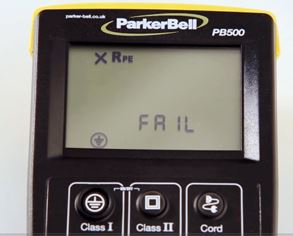
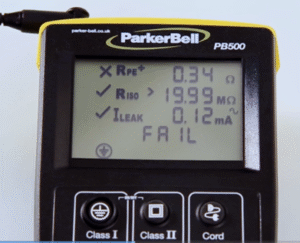
If the appliance fails the earth continuity (Rpe) Test one of two screens will appear.

This screen showing fail Rpe without figures, indicates that there are three possible causes for failure.
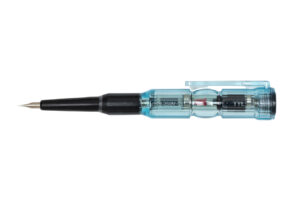
If you think that the probe or crocodile clip is not connected to an external earth point you can try other metal parts and continue testing. Or you can use an earth continuity finder, such as the Multi Tester Screwdriver provided.

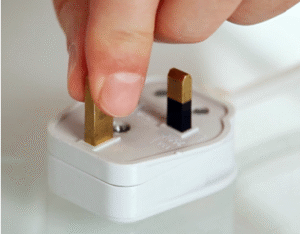
This is done by:


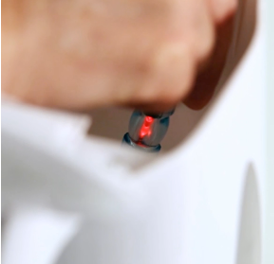
If the LED light shines you have found an external earth point. If not continue to touch other metal points until an earth is found. You may want to make a note of this location for future tests.
If you are still unable to locate a suitable earth point you should contact the appliance manufacturer for guidance.
If the appliance fails the earth continuity (RPE) tests because the earth wire is broken or the electrical resistance of the earth wire is too great to be considered safe, the appliance must be removed from use, and clearly marked as failed pending repair or disposal of the item.
This screen, which shows figures after a failed earth Rpe test, indicates that the appliance has a longer lead than normal.

A calculation of its length and cross-sectional area (CSA) will determine whether the electrical resistance of the earth wire falls within acceptable limits, as prescribed in Table A on page 15 of the operating instructions.

The CSA will be marked on the lead.
The calculation is 0.1 ohms plus the sum of the length of the lead multiplied by its corresponding ohms value.

If the calculated figure falls within acceptable limits, place a “Pass” label on the appliance and complete the relevant Portable Appliance Test Report sheet noting the screen readings, length and cross sectional area of the lead.

If the screen reading is greater than the maximum resistance allowed, the appliance must be removed from use, and clearly marked as failed pending repair or disposal of the item.
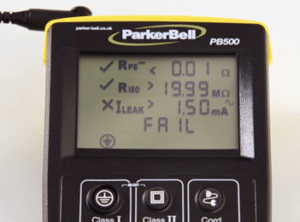
If the appliance passes the earth Rpe test, but fails the Insulation (Riso) test, the appliance must be removed from use, clearly marked as failed pending repair or disposal of the item.
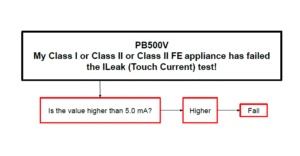
If the appliance passes the earth Rpe and Insulation Riso tests but fails the Leakage (ILeak) test

The appliance may still pass if the leakage ILeak readings are in accordance with the below.

A portable appliance is an item of equipment less than 18kg that is intended to be moved while in operation or an appliance that can easily be moved from one place to another, e.g. PC’s, toaster, fan heater, laminator desk fan, extension lead.
A hand-held appliance or piece of equipment is equipment intended to be held in the hand during normal use, e.g. angle grinder, iron, hedge cutter, soldering iron, power drill etc.
If the criteria is met, p lace a “Pass” label on the appliance, and complete the relevant Portable Appliance Test Report sheet noting the screen readings.
Otherwise the appliance must be removed from use, and clearly labelled as failed pending repair or disposal of the item.
Class I Failed? still not sure what to do? Call us on 01392 364933 or email sales@parker-bell.co.uk for free technical support and advice.